


Toggl tracks time. Lucen Track turns it into billable revenue
Lucen Track lives inside Outlook, Microsoft Teams, Microsoft Planner and more, so your team logs time where they already work and nothing falls through the cracks. Fewer missed hours mean more accurate invoices and more revenue captured, not left on the table.
14-day free trial · No credit card required · Free migration support
Lucen Track (formerly Timeneye) vs Toggl
feature comparison
Discover how Track compares and which features best support your workflow
Track: a comprehensive solution for the Microsoft Ecosystem
If your team runs on Microsoft 365, Track is built for you.
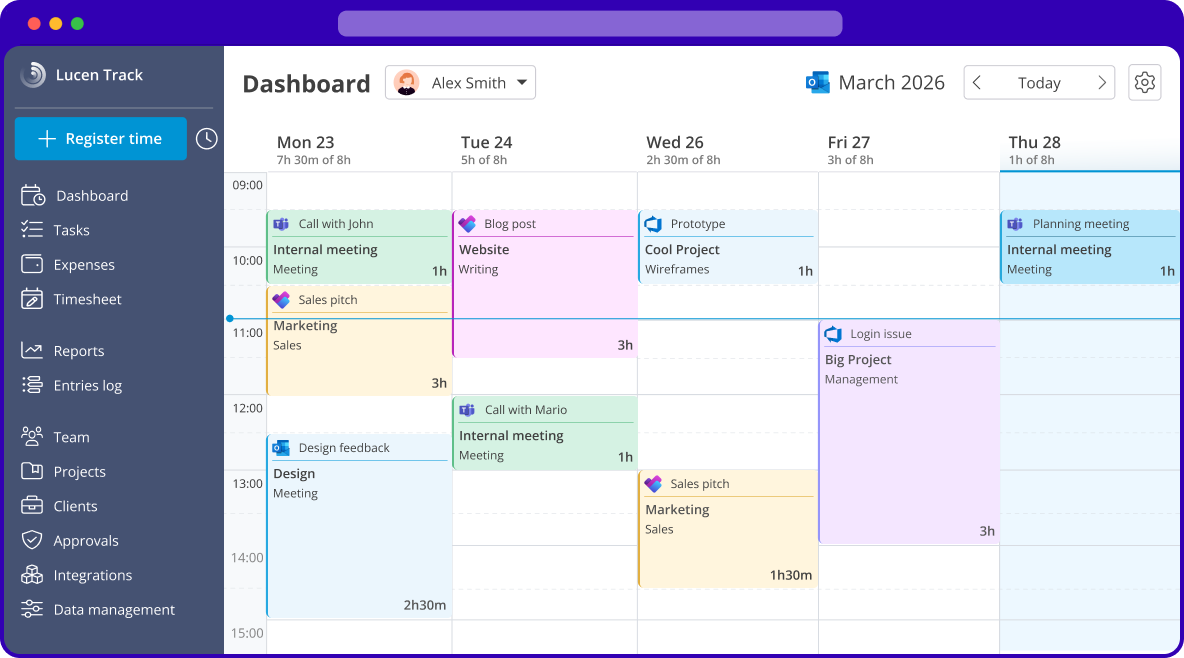
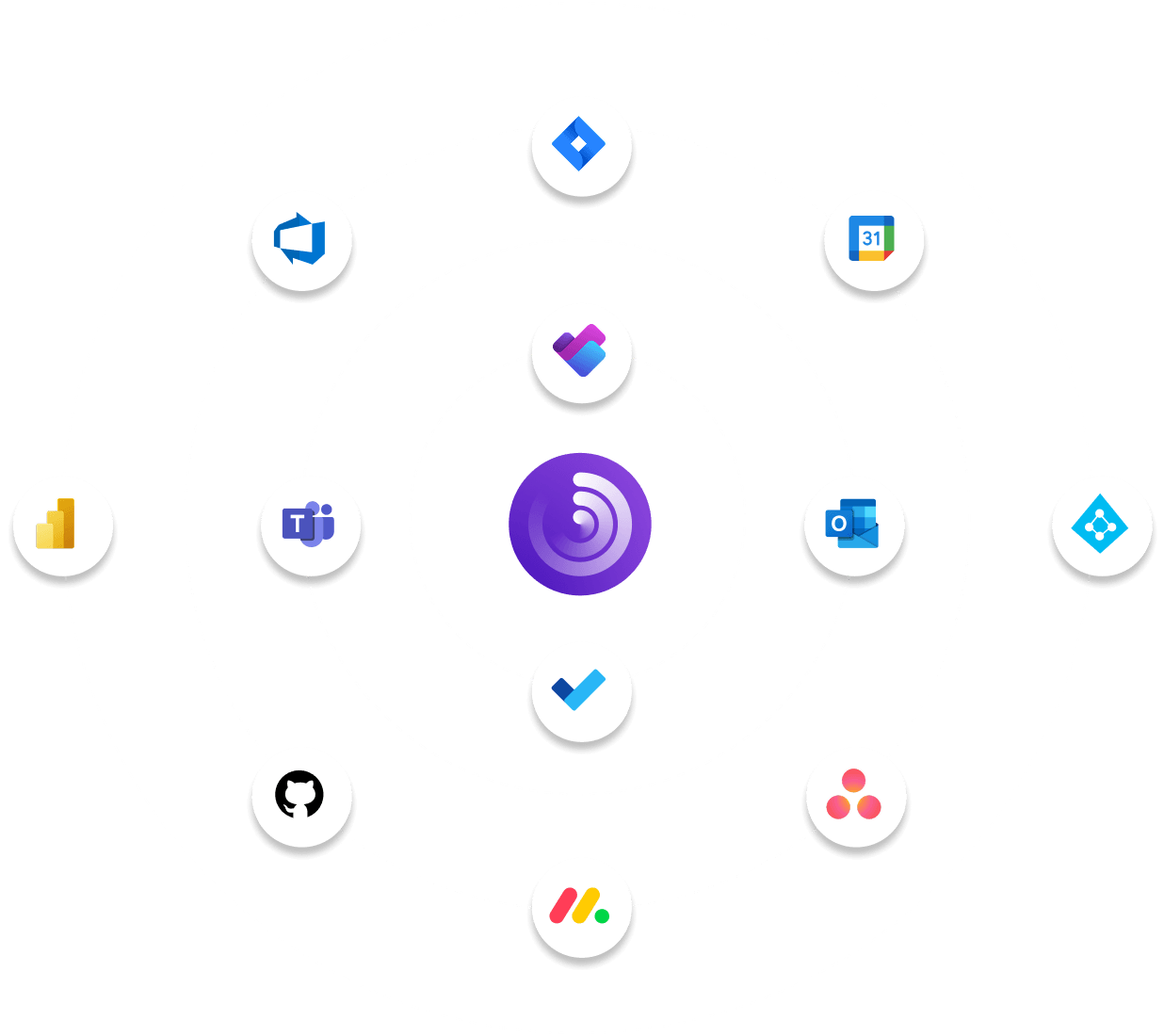
Track seamlessly integrates across the Microsoft ecosystem: with Microsoft Teams, and Microsoft Planner for project management, and Outlook Calendar and Microsoft Teams Calls for automatic meeting tracking.
Boost personal productivity with the integration with Microsoft To Do, empower dev teams through the Microsoft Azure integration, and gain powerful insights with the Track to Power BI connector.
Familiar frustrations, finally fixed
We've heard from teams who loved Toggl before relizing it wasn't enough.
Work where your team works, not just in a browser tab
The new Toggl lists about 10 working integrations, and many older Toggl Track integrations are now legacy-only. There's still no Microsoft Teams app and no Planner, Azure DevOps or Power BI connection. Track goes deeper, connecting natively with the Microsoft 365 tools your team already runs on, syncing projects, tasks, and users too.
Reports you can act on, without the cost of upgrades
With Toggl, scheduled reports, profitability and utilization reports need the Premium plan ($16 per user per month, billed annually). Track gives every team dashboards, customizable filters, and automated reports you can share with clients or leadership in one click.
Track time and time off in one place
Toggl now includes PTO and public holidays from its Starter plan, but if you want approvals, accrual balances and leave policies, they're not in the plan: they come with the Time Off Pro add-on, an extra $2 per user per month. Track keeps time tracking and time off in the same tool, so capacity, availability, and logged hours are all there.
What our customers say
Common questions
Both tools handle project-based time tracking, but they serve different workflows. Toggl is a standalone tracker focused on profitability and capacity planning, with a short list of integrations. Track is built specifically for teams in the Microsoft ecosystem, with native integrations across Teams, Outlook, Planner, Azure DevOps, and Power BI, plus reporting and productivity insights. If your team runs on Microsoft 365, Track will feel like a natural extension of how you already work.
Yes. Track supports importing your projects and time entries from Toggl via CSV, and our team is available to help you through the migration. Most teams are up and running within a day. We'll make sure nothing gets left behind.
For most teams, yes. Track starts at $7 per user per month, compared to Toggl Starter at $9 per user per month (both billed annually). On Premium, Track is $13 per user per month vs Toggl's $16 (billed annually; $24 billed monthly).
You can create a Track account and start tracking in minutes. No credit card is required to start your 14-day free trial, and our onboarding resources will get your team productive on day one.
Track is built to scale: from solo freelancers to enterprise organizations with thousands of users. It's particularly well-suited for agencies, consultancies, and project-based teams of 5–200 people who want real visibility into where their time goes, not just a log of hours.

Switch from Toggl in minutes, we'll help you migrate.
Start a free 14-day trial and see why 800+ teams made the move to Track.
14-day free trial · No credit card required · Free migration support