


Private equity transaction timeline template
Simple, presentation-ready timeline that brings clarity and structure to complex private equity deals.
Powered by Lucen Timeline (formerly Office Timeline)

If you’ve ever walked into an investment committee meeting thinking, “This will take ten minutes just to explain where we are,” then you already understand the value of a well-structured transaction timeline.
Private equity deals (and M&A transactions more broadly) are rarely linear. They evolve, they expand, they compress. Legal documents move forward while diligence deepens. Financing discussions progress while regulatory questions linger. Internal approvals stack on top of external processes. Dates shift, assumptions change, and somehow, you still need to present a clean, confident update.
That’s exactly what a private equity transaction timeline template can help you do.
The free template is a professional, editable visualization tool built to help you communicate transaction progress clearly, whether you’re speaking to partners, boards, investment bankers, lenders, or advisors involved in the deal process.
One slide to visualize the entire deal
Here's a common problem: finance teams under deadline pressure rely on spreadsheets or dense bullet slides to explain transaction progress to boards, committees, or investment bankers. The data is all there. But spreadsheets aren't narrative tools.
A well structured M&A transaction timeline turns complex activity into a visual story from non-disclosure agreements through the diligence process, signing, and closing. It tells you what's overlapping, what's complete, what's next, how long it will take, and what the risks are across the full private equity deal lifecycle.
When leadership can see how workstreams interact over time, the conversation shifts from clarification to decision-making. That's the real purpose of this template - to change the quality of the discussion in the room. This becomes your board communication tool, your deal status dashboard, and your negotiation context setter - effectively your proposed project plan for how the transaction will move. All in one slide.
A look inside the private equity timeline template
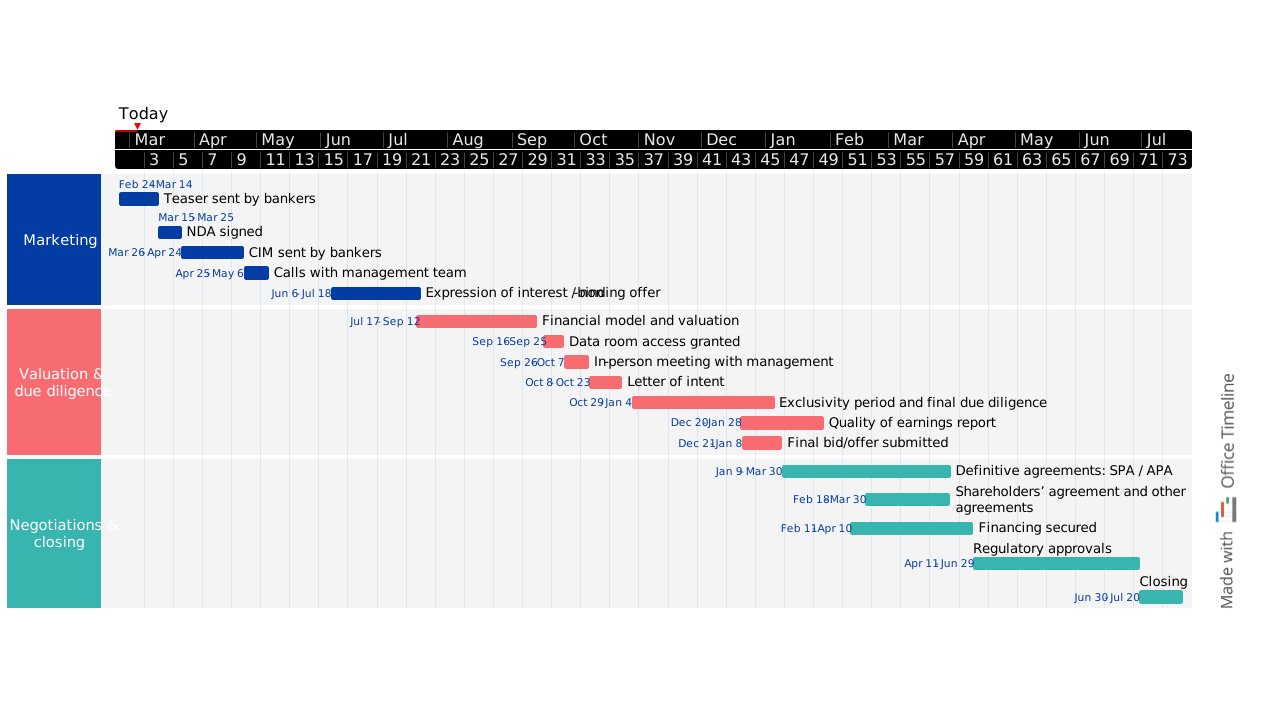
Let’s walk through what you're looking at in this free template:
Swimlanes to separate parallel workstreams or phases
What separates this template from a simple Gantt chart is that it organizes tasks into swimlanes, helping visually separate different parts of the deal process. In M&A transactions, this matters because work doesn't always happen sequentially. Legal documents, financing coordination, and regulatory processes each has different owners, different pacing, and different risks from the non-disclosure agreement stage through final due diligence and closing.
By separating these streams horizontally in the template, ownership becomes clear, overlap becomes visible, and bottlenecks are easier to spot. Instead of stacking all tasks in one congested timeline, swimlanes prevent visual clutter and help your audience scan information instantly.
In high-stakes meetings like investment committee or board sessions, that clarity is the difference between productive discussion and frustrating confusion.
Dual timescale for strategic and tactical conversations
One of the smartest features here is the dual timescale. Professionals working in M&A know this dynamic: senior leadership thinks in months or quarters, deal teams think in weeks. A single timeline scale rarely serves both audiences effectively.
This template shows both. The top scale marks months while the second numbers the weeks, so you can simultaneously show strategic deal pacing and tactical execution detail.
For example, if a due diligence workstream extends two weeks longer than planned, the impact on signing and closing dates becomes immediately visible, without needing to narrate the entire chain of dependencies. It supports both macro and micro conversations on the same slide, which can be especially valuable during the due diligence process when timing is critical and when lenders are waiting on updated financial modeling outputs before finalizing terms.
Clean presentation-ready design
The template is designed to look professional without extra work. It has a clean layout, balanced use of color, and clear typography, so you can put it in front of a board or investment committee without apologizing for how it looks.
Each task shows its duration and timeframe right on the bar, so you don't need to decode the timeline or cross-reference dates. The color scheme is easy on the eye and helps different workstreams stand out without being distracting. Whether you're presenting to your internal team or external stakeholders, the visual quality holds up from early valuation range discussions to execution of the purchase agreement.
Fully editable, because transactions move
A static private equity transaction timeline is rarely useful for long. If you work in M&A, you don’t need to be told that timelines shift.
This free template is fully editable in PowerPoint, which means you can adjust all details without rebuilding the slide from scratch - whether that’s a new diligence request, or a shift in when the investment committee will review the final investment memorandum.
If you want to streamline that editing process further, Lucen Timeline integrates directly into PowerPoint to help generate and update professional transaction timelines automatically. Instead of manually resizing shapes or reformatting alignment, you can modify data and refresh this private equity template in seconds. For teams managing multiple active transactions or frequent presentation updates, that efficiency can make a meaningful difference.
You can explore Lucen Timeline with a free 14-day trial and see how it fits into your workflow.
Common private equity transaction timeline delays
Even well-run M&A processes encounter friction. Knowing where transactions typically slow down helps you plan more realistically from the outset. Here are a few issues that frequently extend closing dates:
- Buyer loses financing commitment mid-process. Market conditions change, lender pulls back, financing terms worsen.
- Key customer relationship disclosed in diligence creates concern. Customer concentration or pending contract renewals that weren't initially highlighted become deal issues requiring resolution.
- Management team member leaves during process. Key person departure during a transaction creates buyer anxiety about business continuity and often requires timeline extension to address concerns about management team structure and organizational structure.
- Market conditions change affecting buyer appetite. Industry headwinds, competitive dynamics, or broader economic concerns emerge during the deal process, cooling buyer enthusiasm.
- Regulatory or compliance issue discovered during diligence. Pending litigation, environmental concerns, or compliance gaps that weren't disclosed upfront need to be either resolved before closing or properly addressed in the deal structure and pricing.
- Seller's other priorities create internal resource constraints. Running the business while supporting extensive diligence is demanding. If management bandwidth becomes constrained, the deal timeline extends - particularly when non-executive management is carrying extra load during the process
None of these necessarily kill deals, but all of them extend private equity transaction timelines if not managed proactively.
Frequently asked questions
Most middle-market PE deals take 6-9 months start to finish. That said, timing can vary widely depending on the size and complexity of the deal, regulatory requirements, financing structure, and market conditions. Many transactions unfold over several months from initial outreach through signing and closing. Competitive sell-side processes may move faster under structured timelines, while cross-border or heavily regulated deals may extend longer. Because so many workstreams run in parallel, visualizing timing can help teams anticipate interactions and delays across target companies, advisors, and internal approval steps. Realistic private equity transaction timelines assume something will take longer than planned and build buffer accordingly.
The “2 and 20” model refers to a traditional private equity fee structure in which the fund charges an annual management fee, often around 2% of committed capital, and earns carried interest - commonly around 20% of profits above a specified return threshold. While fee arrangements can vary across funds and strategies, this structure remains widely recognized in the industry.
Private equity firms typically hold investments for 5-7 years, though this varies by strategy, market conditions, and individual circumstances. This timeframe allows firms to implement operational improvements, drive revenue growth, optimize capital structure, and position companies for exit at attractive valuations. Hold periods shorter than 3-4 years are generally considered quick flips that may not allow sufficient time for value creation initiatives to fully materialize. Hold periods extending beyond 8-10 years often indicate either a very successful company where exit isn't compelling ("too good to sell") or a challenging situation where attractive exit opportunities haven't materialized.
The hold period is relevant to transaction timing because private equity firms evaluate acquisition opportunities partly based on expected exit timing - if exit markets look challenging in 5 years, acquisition appetite today may be reduced. For deal professionals, understanding a buyer's existing portfolio age and fund lifecycle helps predict their urgency and internal approval processes during transactions.
A typical private equity deal involves acquiring a controlling stake in a company, using a combination of equity and debt financing, and followed by a period of operational improvement or strategic growth initiatives. The process often begins with an investment bank running a structured sale process or the PE firm sourcing the deal directly. After several years, the private equity sponsor may exit the investment by selling to a strategic buyer, another financial sponsor, or through a public offering.
At senior levels, private equity (PE) professionals typically earn more than venture capital (VC) professionals in terms of cash compensation, though this varies by fund size, individual performance, and career stage. PE generally shows higher base salaries and larger annual bonuses due to bigger deal sizes and assets under management.
However, the real wealth creation in both industries comes from carried interest accumulated over time, and successful VC investments in breakout companies like Uber, Airbnb, or other unicorns can produce enormous carry payouts that exceed typical PE returns on a single investment. Early-career professionals often find PE offers better immediate compensation and clearer advancement paths, while VC offers more lifestyle flexibility and exposure to cutting-edge innovation.
M&A transactions typically take so long because they involve coordinating complex workstreams across parties with different incentives and naturally limited trust. The single biggest time consumer is due diligence - buyers need to thoroughly investigate financial, operational, legal, commercial, and technical aspects of the business to validate the investment thesis and uncover material risks. This process can't be rushed without accepting risk levels buyers won't tolerate.
Beyond diligence, legal documentation is intricate and time-consuming. The Stock Purchase Agreement or Asset Purchase Agreement runs 100+ pages with extensive schedules and exhibits covering representations, warranties, indemnifications, conditions precedent, and dozens of other provisions. Even before reaching definitive agreements, negotiating the letter of intent (LOI) and its key terms can take weeks. Financing arrangements need time even with committed debt, with syndication to other lenders and final documentation requiring weeks to complete.
The somewhat adversarial nature of M&A also extends timelines. Potential buyers want comprehensive protection and favorable terms, sellers want clean exits and maximum value, and neither party fully trusts the other at the outset. Finally, coordination complexity increases exponentially with deal size and scope. Financial timelines like this template can't eliminate these inherent complexities, but they can prevent coordination errors and communication failures from adding extra months to an already lengthy process.
The 100-day plan in M&A is a structured roadmap developed by the acquirer that outlines critical actions to be taken in the first 100 days immediately following deal closing to drive successful integration and value capture. This plan is typically developed during the due diligence phase and finalized before closing, then executed immediately once the transaction closes.
A poison pill, formally called a shareholder rights plan, is a defensive tactic used by public company boards to make hostile takeovers prohibitively expensive and difficult for unwanted acquirers. When a hostile bidder crosses a specified ownership threshold (typically 10-20% of outstanding shares), the poison pill "triggers," allowing existing shareholders except the hostile party to purchase additional shares at a steep discount. This dramatically dilutes the hostile acquirer's ownership stake and makes the takeover far more expensive to complete.

Your download should start now. If it doesn’t start click here and check your inbox for tips to get started.