


Clinical trial roadmap template
Large-scale PowerPoint clinical trial roadmap template featuring color-coded elements to highlight the main phases necessary for a drug or procedure to receive FDA approval.
Powered by Lucen Timeline (formerly Office Timeline)

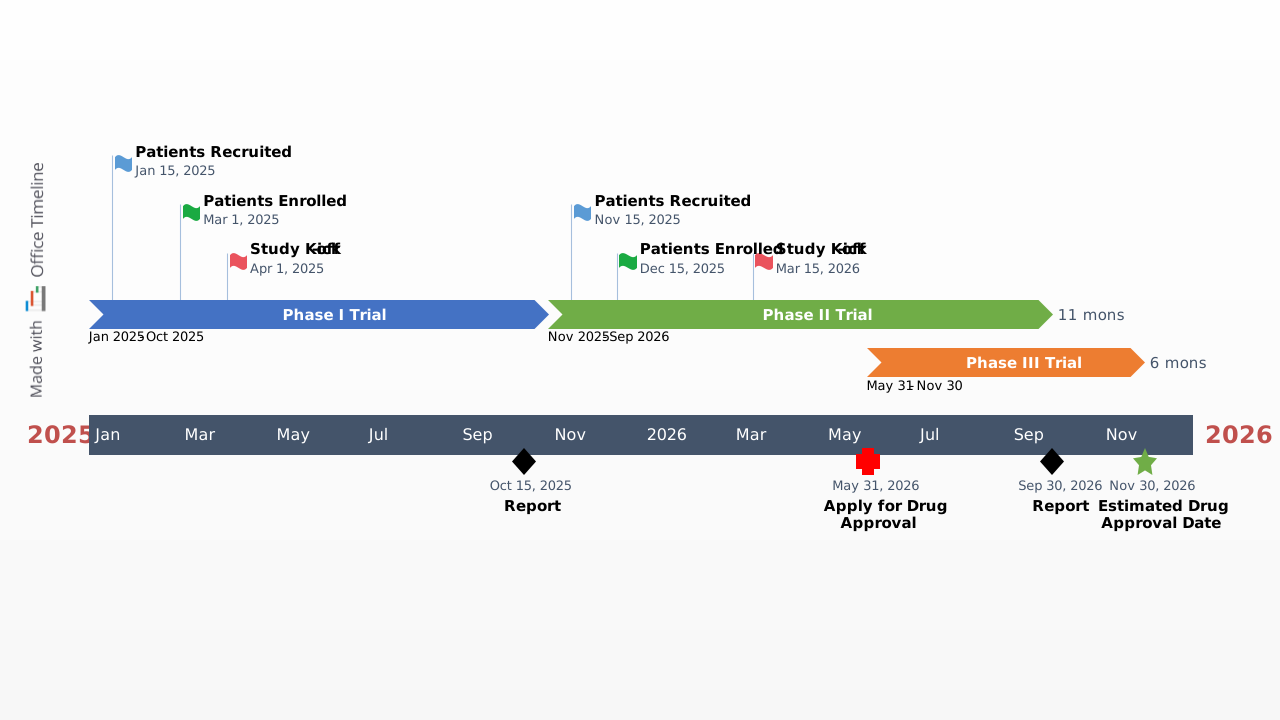
An essential part of medical project management, clinical trials represent a category of research that aims to evaluate both the efficacy and safety of a pharmaceutical drug, dietary choice, intervention or medical device. The duration and specifics of the trials will, of course, depend on the type of product being tested. In order to receive a green light, the study must show the benefits for the patient outweigh the risks. For instance, cancer treatments have been approved in spite of the negative side effects. This is because they address a life-threatening condition and are administered under the direct supervision of a medical professional.
The clinical trial roadmap is a free PowerPoint template that features all the 3 main phases necessary for any drug or procedure to receive approval from the FDA. Phase I is conducted on a small, healthy group of participants and aims to determine the safe dosage as well as uncover potential side effects. Phase II focuses on proving the efficacy compared to a placebo and identifying the optimal dosage that produces the benefits with minimal side-effects. Finally, in Phase III, the efficacy compared with existing alternatives will be measured in a large-scale study on thousands of participants who are affected by the disease.
You can use the Lucen Timeline PowerPoint add-in to create a roadmap for your clinical trials – but to help you save time you can download this template for free. Try the tool’s free 14-day trial and transform intricate patient data into a clear, visually impressive and easy-to-read report. You will also gain access to the more advanced Excel and Project import features, which help you consolidate all the information you need to maximize the efficiency of your studies at the touch of a button.
Frequently asked questions
Clinical trials follow three main phases before a drug or medical device can receive FDA approval. Phase I tests a small group of healthy volunteers to establish safe dosage levels and identify side effects. Phase II expands the study to evaluate efficacy against a placebo and determine the optimal dosage that balances benefits with minimal adverse effects. Phase III scales up significantly, enrolling thousands of participants affected by the target condition to measure how the treatment performs compared to existing alternatives.
The timeline varies widely depending on the type of product and the condition being studied, but most clinical trials take several years to complete across all three phases. Phase I can last anywhere from a few months to a year, Phase II often runs one to two years, and Phase III may extend to three or four years due to the size of the participant pool and the depth of data required. Regulatory review after Phase III adds further time before a product reaches the market.
Clinical trials involve overlapping workstreams, strict regulatory milestones, and coordination across multiple teams, from research scientists and clinicians to regulatory affairs and data management. A roadmap gives project managers a single visual that captures each phase, its key deliverables, and the dependencies between them. This makes it easier to track progress, communicate timelines to sponsors and stakeholders, and flag delays before they cascade through downstream activities.
The U.S. Food and Drug Administration (FDA) oversees the clinical trial process to ensure the safety and rights of participants are protected and that the study data is reliable. Before a trial can begin, the sponsor must submit an Investigational New Drug (IND) application for FDA review. The agency then monitors the trial throughout its phases and, once all data has been collected, evaluates whether the evidence supports approval for public use. Similar regulatory bodies exist in other regions, such as the EMA in Europe.
At its core, the study must demonstrate that the benefits for the patient outweigh the risks. This doesn't mean a treatment needs to be free of side effects. Cancer therapies, for example, have been approved despite significant adverse reactions because they address life-threatening conditions and are administered under direct medical supervision. The evaluation weighs factors like the severity of the disease, the availability of alternative treatments, and the degree to which the drug or device improves patient outcomes relative to those risks.
Clinical trials bring together a wide range of stakeholders, each with a distinct role. The sponsor, usually a pharmaceutical company or research institution, funds and designs the study. Principal investigators and clinical research teams conduct the trial and collect data on-site. Regulatory affairs specialists manage submissions and compliance with agencies like the FDA. Contract research organizations (CROs) often handle logistics, monitoring, and data analysis. And of course, the participants themselves are central to the process, making recruitment and retention a constant project management challenge.
Stakeholders such as sponsors, regulatory bodies, and executive leadership need a clear, high-level view of the trial's progress without getting buried in granular data. A roadmap format works well here because it lays out all three phases, their milestones, and their timelines on a single visual. This template, for example, is designed as a PowerPoint slide you can drop directly into presentations, making it easy to communicate where the study stands and what's ahead during review meetings or funding discussions.

Your download should start now. If it doesn’t start click here and check your inbox for tips to get started.