


Online banking platform implementation template
Clear, structured timeline slide to track dependencies and critical path across complex banking system implementations.
Powered by Lucen Timeline (formerly Office Timeline)

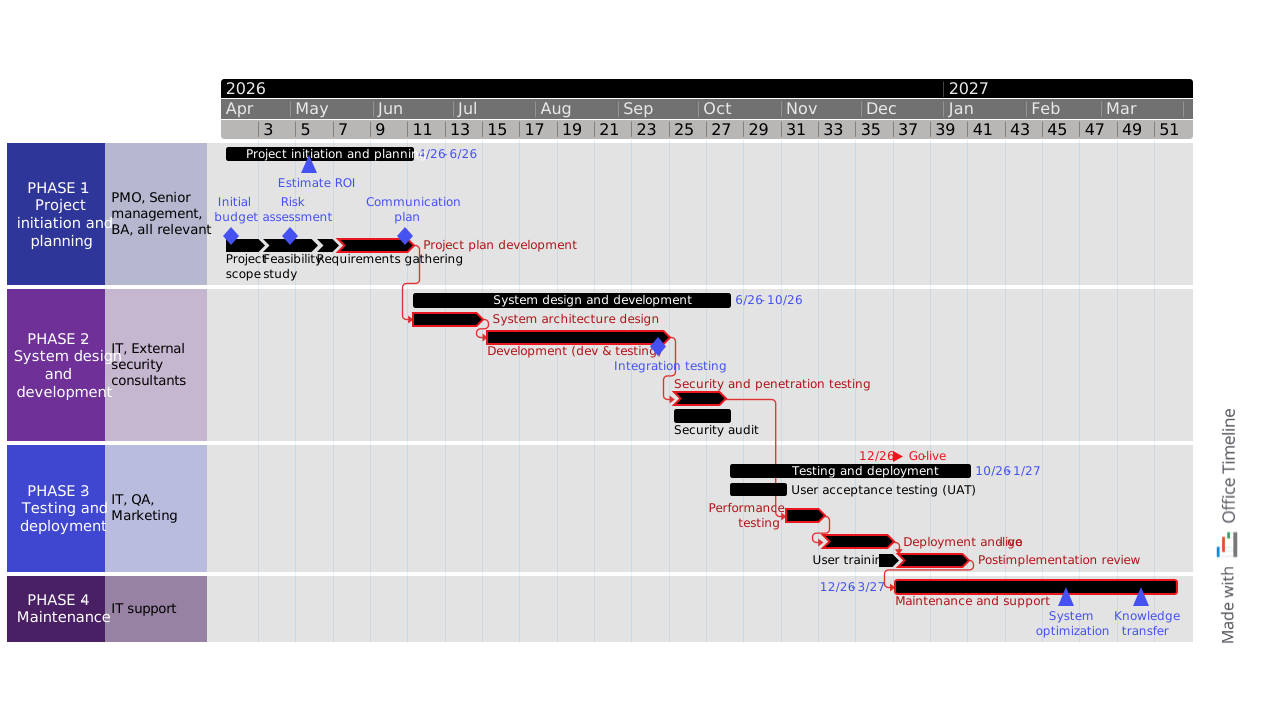
Your online banking platform implementation involves three vendors, touches seven internal systems, and requires coordination across IT, security, compliance, operations, and customer experience teams.
The project plan exists somewhere, most probably in a tool that two people actually open. Status updates happen in meetings where everyone reports progress but no one can confidently say you're on track. Your vendor says they're "making good progress." Your security team says they need "a few more weeks." Operations wants to know when to start training staff, and honestly, you're not entirely sure. Then someone asks the simple question: "So when exactly are we launching?"
Implementing new digital banking platforms is complex by nature. That's not the problem. The problem is when that complexity stays invisible, and when the path from where you are today to go-live isn't clear to the people who need to deliver it.
A visual implementation timeline solves the visibility problem. It doesn't make the technical work easier, but it does make coordination dramatically simpler. When everyone can see how their work connects to everyone else's, how vendor deliverables affect testing schedules, and which activities actually determine your launch date, projects run more smoothly.
This free template gives your project that shared visual structure, from planning through go-live, across all teams and vendors.
What this banking template includes
This PowerPoint template gives your banking system integration a professional, presentation-ready structure that works in both executive steering committee meetings and weekly team coordination calls.
Four-Phase Structure Covering the Full Implementation
The template is organized into four major phases:
- Phase 1 - Project Initiation and Planning covers the foundational work: defining scope, assessing feasibility, estimating ROI, conducting initial risk assessment, developing your communication plan, and finalizing vendor selection. This is where you set the trajectory for everything that follows.
- Phase 2 - System Design and Development is where the actual platform takes shape: system architecture design, development iterations, integration work with your core banking systems, security implementation, and ongoing testing cycles. This is typically the longest phase and where most of the technical heavy lifting happens.
- Phase 3 - Testing and Deployment brings everything together: integration testing to ensure all systems work together, UAT with actual account holders, performance testing under load, security audits and penetration testing, user training for staff, and the phased rollout to customers. Getting adequate time for this phase is critical.
- Phase 4 - Maintenance covers the ongoing work after go-live: IT support, system optimization and knowledge transfer to the teams who'll be running the platform long-term.
Each phase shows the major activities, key milestones and typical durations. The structure is flexible enough to adapt to your specific implementation while detailed enough to drive coordination.
Swimlane format showing workstreams and dependencies
The timeline uses a swimlane layout with each major workstream in its own lane. You can see at a glance which activities run in parallel, where dependencies connect different workstreams, and where handoffs between teams need to happen.
Tasks are shown as bars with clear start and end dates, while milestones appear as colorful markers. Dependencies between activities are shown with connecting lines, and color-coding makes the critical path obvious at first glance.
Built for PowerPoint - easy to share and customize
The template is a native PowerPoint slide, which means everyone on your team can view it, executives can see it in board presentations, and vendors can reference it in status meetings all without needing specialized project management software.
Whether you're rolling out a new internet banking platform, upgrading your mobile banking app, integrating new features like payment processing or loan management, or replacing your core banking system, you can easily adapt this four-phase structure to your specific needs.
Running a rather straightforward platform upgrade? You might compress Phase 1 and expand Phase 3. Running a full digital transformation? You'll likely extend Phase 2 and add more integration testing in Phase 3. Remove activities that don't apply to your project, add your milestones, adjust phase durations to match your timeline, all within PowerPoint.
Who this template is for
This template can be used by anyone managing digital banking platform implementations and who is responsible for coordinating IT teams, vendors, compliance, operations, and business stakeholders to deliver a working platform on schedule.
That includes:
- IT project managers leading digital banking transformations
- Program managers coordinating multiple workstreams and vendors
- Product managers planning digital banking services and managing requirements
- Operations managers preparing teams and processes for the new platform
- Compliance and risk managers tracking security milestones and regulatory requirements.
The free template works for first-time implementers who need a structured starting point and experienced banking project managers who want a professional, customizable timeline they don't have to build from scratch.
How to make your banking timeline using this template
Map your implementation to the four phases
Start by taking the four phases in the template and mapping them to your specific project. Identify where your project is today and what's already complete. Then map out the remaining work: What's your vendor delivering and when? When does security testing start? Populate the timeline with your actual activities, dates, and milestones.
Assign clear ownership for each workstream
For each major workstream, assign a specific person or department who owns delivery. This doesn't need to be complicated or super detailed - initials or team abbreviations on the timeline are enough. The goal is making accountability visible so everyone knows who's responsible for what.
Identify and mark your critical path
Before you get too deep into the details, identify which activities are on the critical path - the sequence of tasks that determine your minimum timeline. Any delay to critical path activities directly pushes your launch date and can impact your project’s success.
In most banking timelines, the critical path runs through vendor deliverables, integration work, and security/compliance reviews. Mark these activities clearly on your visual, as we did in this template through colors and outlines. These are the tasks and deliverables that deserve the most focus and the tightest monitoring.
Keep it updated - this is your single source of truth
Commit to updating your banking system timeline at a regular cadence. When a vendor pushes a deliverable, update the timeline before your next status meeting. When testing uncovers issues that will take time to resolve, update the timeline and share the implications with your steering committee.
This template can be edited directly in PowerPoint using standard controls, or you can use the Lucen Timeline PowerPoint add-in to make updates even faster - adjusting dates, extending phases, and adding milestones in seconds rather than minutes. Lucen Timeline can also pull data from tools like Microsoft Project® or Excel® if you're maintaining detailed schedules there. Try Timeline free for 14 days to see how it simplifies updates and keeps your online banking integration on track.
Use it to drive better coordination meetings
The implementation timeline works best when it’s actually visible. Put it on screen in your weekly project meetings. Walk through the upcoming two weeks and identify handoffs, dependencies, and risks. When someone reports a delay, show the timeline and work through the downstream impacts with your stakeholders.
This changes the nature of status meetings. Instead of each team reporting in isolation, you're having a conversation about the project as a connected system and issues get escalated faster because the impacts are immediately visible to everyone in the room.
Online banking implementation phases that typically take longer than planned
Here's where to be especially realistic when building your banking timeline:
- Vendor selection and contracting often takes longer than expected. RFP processes run long. Contract negotiations get complicated. This happens before the "official" project start, so it often doesn't get adequate time in the timeline.
- Integration work almost always surfaces surprises. APIs don't work exactly as documented. Data formats don't quite match. The integration that should take two weeks takes four. Plan accordingly.
- Security testing and remediation cycles are where many implementations get behind. The first security audit typically finds issues, then fixes are implemented, and re-testing happens – and then guess what? More issues surface. Building time for at least one full remediation cycle is wise.
- User acceptance testing compresses when earlier phases overrun, but compressing UAT is risky. Users need adequate time to test thoroughly, and issues found here are better than issues found after go-live. Protect this phase in your timeline.
Best practices for internet banking platform implementations
Start with executive alignment on timeline realism
Timeline challenges often start at the very beginning, when optimistic schedules get approved because they sound good in business case presentations. A 12-month estimate that should be 15 months means you're behind from day one.
When presenting your online banking implementation plan to leadership, use realistic ranges based on actual experience with similar projects, not vendor estimates or wishful thinking. Get executive buy-in on the realistic timeline before the project kicks off. It's much easier to get agreement for 15 months at the start than to ask for a 3-month extension six months in.
Coordinate vendor timelines and commitments early
Most banking system integrations involve multiple vendors who need to deliver in sequence or in coordination. Your platform vendor needs to deliver before integration work can complete. Your security audit can't start until development is substantially done.
Get firm delivery commitments from vendors in writing, ideally in contracts with clear milestones and deliverable definitions. Track vendor progress actively, validating actual progress against commitments. When vendors start slipping, escalate immediately and adjust your timeline.
Don't let vendor delays become your problem too late to recover. Your timeline should make vendor deliverables and their downstream dependencies crystal clear to everyone.
Consider a phased rollout instead of a big bang launch
The days of launching new banking solutions to all clients simultaneously are mostly over. Phased rollouts let you validate performance under real load, catch issues with smaller customer populations, adjust support staffing based on actual volumes, and build confidence before scaling.
This banking timeline template can be adapted to show phased rollout waves: internal users first, then perhaps a small customer segment, then broader rollout in stages. Each wave is essentially a checkpoint where you validate readiness before expanding.
This approach takes a bit longer overall, but it dramatically reduces launch risk and gives you much better control over the customer experience.
Frequently asked questions
Most banking app development projects range from 4 to 12 months, depending on complexity. A basic mobile app using established frameworks and features may be completed in 4–6 months. On the other hand, enterprise implementations with extensive backend integration, security requirements, and regulatory considerations often extend to 12–18 months.
The biggest variables are integration complexity, compliance requirements, customization level, and development team experience. For institutions managing multiple financial timelines, a clear visual implementation schedule helps coordinate cross-team efforts and set realistic expectations.
Several major trends are reshaping the banking industry:
- Embedded finance and banking-as-a-service (BaaS) are allowing non-bank companies to offer banking services directly within their platforms.
- AI and machine learning have moved from experimental to operational, powering everything from personalized financial advice to fraud detection.
- Open banking APIs have matured beyond simple account access to enable rich data sharing between banks and third-party providers, creating entirely new service ecosystems.
- Financial institutions are experimenting with blockchain for cross-border payments and digital identity.
- The mobile-first trend continues to accelerate, with several successful banks now operating entirely without physical branches.
For financial institutions implementing new platforms, these trends need smart and flexible technology choices, and they also increase architectural complexity overall, making structured digital banking transformation roadmaps even more important.
Internet banking is heading toward experiences that are more personalized, more invisible, and more integrated into daily life rather than being separate banking "sessions." The trend is toward banking that happens within whatever app or platform you're already using (your shopping app, your investment app, your messaging app) rather than requiring you to open a separate banking app.
Embedded AI will be a core component, providing increasingly sophisticated personalization: financial advice tailored to your specific situation, proactive insights about your spending patterns, automated financial management that adapts to your behavior and goals.
Voice and conversational interfaces will make banking interactions feel more natural, with less navigation through menus, more just asking for what you need. Biometric and behavioral security will continue advancing, making banking solutions more secure while being less intrusive.
Open banking ecosystems will expand dramatically, with banks serving more as platforms connecting customers to financial services from many providers rather than as the sole source of all services.
Innovation in augmented and virtual reality might create new ways to visualize and interact with financial information, though this remains somewhat speculative.
Banks implementing platforms now should build with flexibility to adopt emerging capabilities while maintaining security and compliance rigor. That's why realistic implementation timelines that don't cut corners on security and testing remain critical as the technology evolves.
AI will continue automating routine operations such as fraud detection, customer service interactions, and data reconciliation. However, strategic oversight, regulatory interpretation, relationship management, and complex advisory roles remain human-driven.
Banking will be reshaped by AI, not replaced by it.
Investment banking will be transformed by AI, but senior investment bankers aren't becoming obsolete anytime soon. Here's the reality: certain aspects of junior investment banking work are already becoming automated processes. The work that remains human centers on what machines still can't do well, like originating deals through long-term client relationships built on trust, negotiating complex transactions where reading the room and understanding human motivations matters, or creating novel deal structures for unique situations.
For banking professionals, the implication is clear: develop skills in areas where human judgment, relationships, and strategic thinking provide value that AI agents can't replicate.

Your download should start now. If it doesn’t start click here and check your inbox for tips to get started.