


Criminal investigation template
Native PowerPoint timeline slide with a simple-to-follow layout of key facts that lawyers can use to create clear chronological, fact-based visual exhibits for their court arguments.
Powered by Lucen Timeline (formerly Office Timeline)

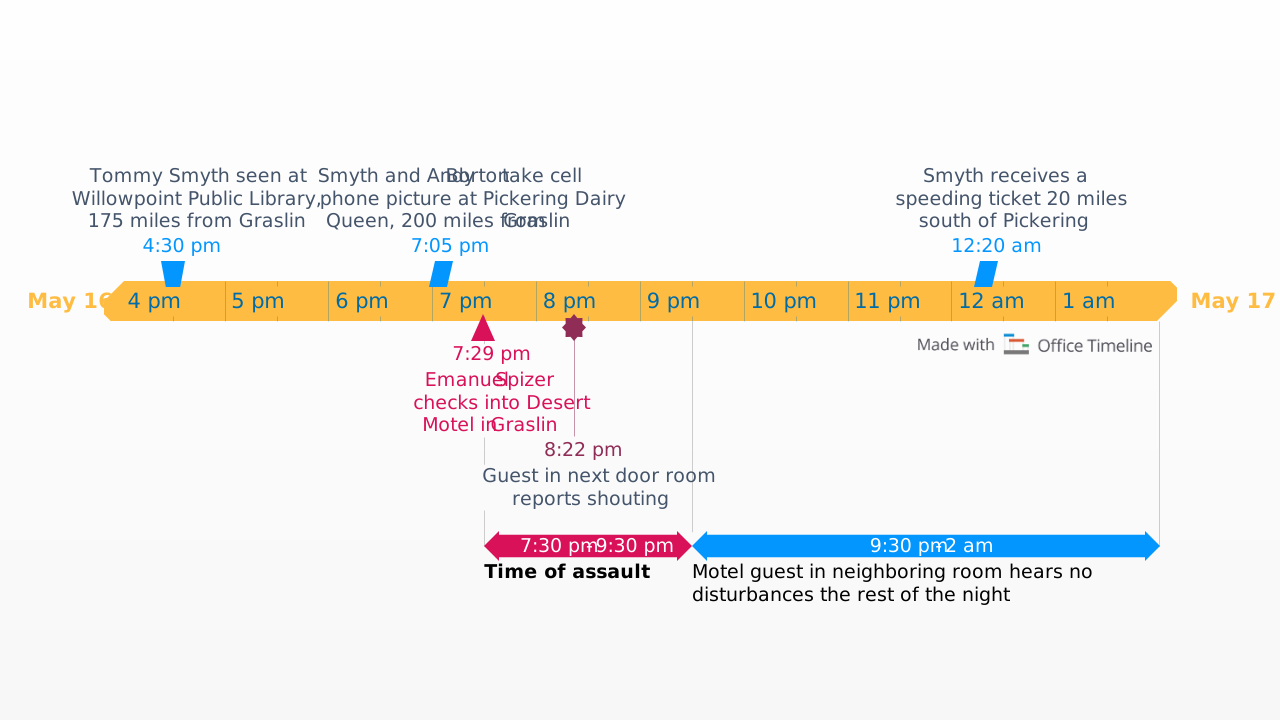
The criminal investigation timeline – a timeline of the crime scene recreated according to the evidence uncovered – is an important part of any court case. Attorneys must compile various data sources, depending on the crime being investigated. For instance, if we are talking about computer crimes, then the digital forensic investigation can reveal the methods used by the perpetrators to gain access to the servers or workstations.
On this page you’ll find a downloadable template for an investigation timeline that we’ve created to provide you with a reliable system of collating and sorting the data in order to piece together the puzzle. We hope it will help you uncover the events that transpired beyond reasonable doubt.
How can a crime scene timeline help the investigation?
The starting goal of any investigation is to sequence the forensic history events in chronological order and creating a criminal investigation timeline is crucial throughout this process. Why? Because learning the progression of the events that took place can provide investigators with a framework upon which they can formulate initial theories.
However, as new info is being uncovered by the digital forensic investigation team from other sources (data storage devices, surveillance equipment, etc.), it’s likely that the criminal investigation timeline will need to be updated often. And it’s crucial that the final graphic looks clear and convincing.
What is a criminal investigation timeline used for?
The linear progression specific to the criminal investigation timeline can help the jury better understand the sequence of events that lead to the crime being investigated. Naturally, as new evidence is brought to light, initial assumptions might be proven false. However, if there is already an investigation timeline template being used, the prosecutor can simply update the graphic accordingly, without starting over from scratch. That’s a lot of time gained which would be better spent on the working the case itself!
Using this criminal investigation timeline template to its full potential
This free investigation timeline template allows you to present all the key facts of the trial in the form of a simple and highly accessible graphic. Presented as a timeline, it also has the advantage that you can display the concurrent or overlapping sets of events without confusing the audience. For instance, when there are multiple suspects or witnesses involved, it’s important for the jury to understand where everyone was and what they were doing at specific times. And that’s just what the investigation timeline template enables you to do.
More, investigations and trials rely on teams of experts and communication between them is essential to the outcome. The criminal investigation timeline is printable, shareable and easy to update with PowerPoint. This means that you can keep everyone up to speed with the newest details regarding the case, as well as to allow everyone to update it with their data.
And, since everyone gains access to the crime scene PowerPoint timeline template free of charge and instantly, it’s much easier to spot inconsistencies between the stories. For example, you can then use the colors and shapes of the tasks and milestones to catalog the witness accounts as:
- Accurate – the details are corroborated by multiple parties or evidence;
- Unclear – no inconsistencies, but further investigation is required;
- Inaccurate – contradictions exist between different witness’ accounts or the testimony and evidence.
This is just one example of using shape and color coding, but you can find more information on how to make a timeline that can help you easily reach the jury on our website. You can download the crime timeline template and update it with the specifics of your case directly in PowerPoint, but it’s much faster and easier to do so with our the Lucen Timeline add-in’s free 14-day trial.
Frequently asked questions
To create a criminal investigation timeline, start by collecting all available evidence — witness statements, forensic reports, surveillance footage logs, and digital records — and arrange each event in chronological order along a single visual axis. The goal is to build a clear, linear sequence that shows exactly what happened and when. Tools like Lucen Timeline make this process faster by letting you plot dates, milestones, and overlapping events directly in PowerPoint or online, so you can update the visual as new evidence emerges without rebuilding it from scratch.
Timelines are important in criminal cases because they transform complex, scattered evidence into a single visual narrative that is easy for investigators, attorneys, and jurors to follow. A well-built timeline highlights gaps in testimony, reveals overlaps between suspect and witness movements, and helps legal teams test theories against the factual record. In courtroom settings especially, a clear chronological graphic can make the difference between a confusing case and a compelling one.
An effective investigation timeline should include key dated events such as the time and location of the incident, witness sightings, suspect movements, evidence collection points, forensic analysis results, and any communications (calls, texts, emails) relevant to the case. Many legal teams also use color coding and shape variations to categorize the reliability of each data point — for example, marking corroborated facts differently from unverified witness accounts — so the audience can quickly assess the strength of the evidence at a glance.
Yes. A criminal investigation timeline template is specifically designed for courtroom use, where clarity and professionalism are critical. Lucen Timeline's free downloadable template produces a polished PowerPoint graphic that prosecutors, defense attorneys, and expert witnesses can present on screen or in print. Because the template is fully editable in PowerPoint, you can tailor colors, labels, and date ranges to match the specifics of any case and update it right up until trial without needing specialized design software.
Keeping a criminal timeline accurate requires a flexible format that supports quick, non-destructive edits. With a template-based approach like Lucen Timeline, you can add, remove, or shift events on the visual without dismantling the entire layout. Best practice is to treat the timeline as a living document: assign a team member to log each new piece of evidence with its source and timestamp, update the graphic regularly, and share the latest version with all stakeholders so inconsistencies between accounts are spotted early in the investigation.

Your download should start now. If it doesn’t start click here and check your inbox for tips to get started.