


Product development roadmap template
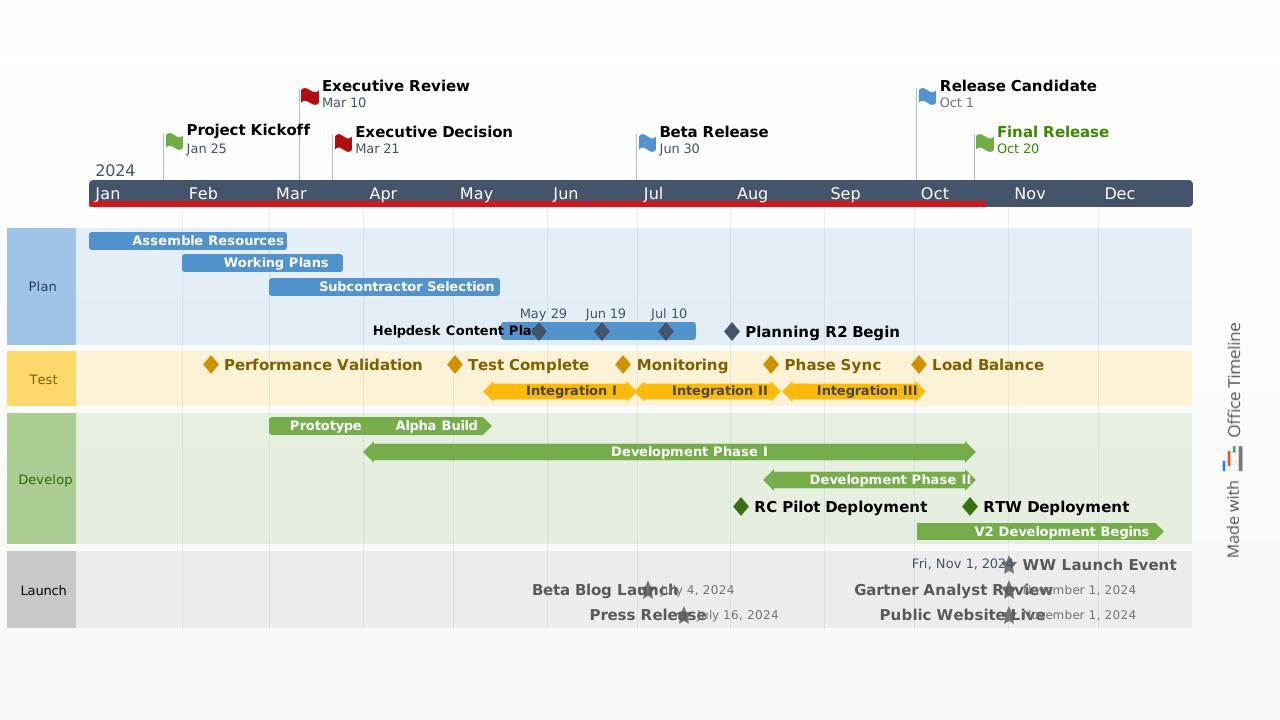
Color-coded swimlane sample for showcasing the journey of a product with smartly grouped milestones and tasks, which reduces the clutter and eliminates overlapping.
Powered by Lucen Timeline (formerly Office Timeline)

Coming up with a new product that fills in a market gap or upgrading your company’s existing roster is a complex, multifaceted task. Things can easily go sideways without a solid plan, one that accounts for all the stages of development, as well as the contingencies. What’s more, convincing stakeholders about the effectiveness of the solution you’re proposing is instrumental, since otherwise your idea might not even get off the ground. Easier said than done, right?
In the business world, time is the most precious resource and you only have a finite amount of it to ‘wow’ the audience. How can you design a roadmap for your PowerPoint presentation that is simultaneously engaging, appealing and informative?
Introducing the product roadmap template that we have designed specifically for showcasing the planning, testing, development and launching phases.
The addition of Swimlanes lets you split the milestones and tasks on the diagram, reducing clutter and eliminating overlapping. Your roadmap presentation will have improved readability and the color-coding allows the audience to easily figure out the order of steps needed for a successful venture.
Our product development swimlane template was designed in Lucen Timeline, an easy to use timeline and Gantt chart maker that packs an impressive array of customization options. It’s a PowerPoint add-in, so you can also leverage the native capabilities of Microsoft’s presentation software to bring your ideas to life. Guide your audience through the journey of your product, from its incipient stages to beta testing to conducting business analysis and devising optimal marketing strategies with a sleek, next gen graph!
You can download this and other roadmap examples free of charge and dazzle your investors with a clear, comprehensive and professional looking presentation.
Frequently asked questions
A product roadmap is a strategic communication tool that outlines direction, priorities, and high-level phases over time. A product development plan is more operational and detailed, covering specific tasks, resources, timelines, and dependencies. The roadmap aligns stakeholders around vision and sequencing, while the development plan guides day-to-day execution. In most organizations, the roadmap informs the plan, not the other way around.
Swimlanes are particularly useful when multiple workstreams run in parallel, such as engineering, marketing, compliance, and testing. By separating initiatives into lanes, you reduce visual clutter and clarify ownership. This structure is especially helpful in executive presentations, where clarity and fast comprehension are critical.
Investor-facing roadmaps should remain high-level and outcome-oriented. Instead of listing every feature, focus on major milestones, validation phases, launch windows, and strategic themes. The goal is to demonstrate structured thinking and market readiness, not operational granularity. Too much detail can dilute the narrative and distract from the product vision.
A roadmap should signal direction without locking the team into rigid feature-level promises. One effective approach is to group work into themes or outcome-based milestones rather than fixed deliverables with exact dates. This allows room for iteration while still giving stakeholders visibility into progress and sequencing.
Common pitfalls include overloading the slide with too many initiatives, presenting feature lists instead of strategic phases, failing to show time progression clearly, and ignoring cross-functional dependencies. Another frequent mistake is designing the roadmap for internal use and then presenting it externally without adjusting the level of abstraction.
A well-structured roadmap demonstrates that product decisions are sequenced logically and aligned with business goals. By visually mapping planning, development, validation, and launch phases, it reassures stakeholders that risks have been considered and resources allocated appropriately. Clear structure builds confidence, especially when discussing funding, timelines, or go-to-market strategy.
Yes, especially when the roadmap is used beyond engineering teams. Launch preparation, beta testing, positioning work, and campaign planning are critical components of product success. Including these elements highlights cross-functional coordination and ensures that the roadmap reflects the full lifecycle from concept to market entry.

Your download should start now. If it doesn’t start click here and check your inbox for tips to get started.