

Customer story
Health
Five jobs, one deployment
How teams across AstraZeneca use the same license for scenario planning, data refreshes, development plans, governments templates and strategy reviews

Lucen Timeline


AstraZeneca
Company size
Industry
Health
Customer since
2014
Users
Nearly 2,000
We chose [Lucen] Timeline and rolled it out to our department. The tool quickly reached 100% adoption to prepare timelines for our governance meetings, and 5 years later we are still going strong!

Hannah Stott
Director, Global Portfolio and Project Management
·
AstraZeneca
In this article
It started with one person
In 2014, one person at AstraZeneca started using what is now Lucen Timeline (formerly Office Timeline). Over the following decade adoption snowballed, and today nearly 2,000 people use it, across somewhere between ten and twenty functions of the business, from oncology program management to chemistry and manufacturing to regulatory. The recent growth was largely ignited by the Global Project Managers adopting and embedding the tool in 2021, who are a central component to many of the teams at AstraZeneca.
Hundreds of timelines, hundreds of formats
Before 2021, program timelines at AstraZeneca were built by hand in PowerPoint and Excel, and everyone had a different method.
Hannah Stott has been at AstraZeneca for seven years and works in Global Portfolio and Project Management (GPPM), a department of about 200 people that manages the company’s clinical trials. She described the old way of working like this:
“Before [Lucen] Timeline, Project Managers and functions updated timelines by hand, moving hundreds of shapes around on a slide with no real consistent formats. This was time-consuming, messy and inefficient – and did not represent our work clearly in front of senior leaders.”
The team summed up the problem as hundreds of timelines in hundreds of formats.
Governance reviews started with working out how to read each particular slide, and handovers between functions meant rebuilding the picture. Since every version was made by hand, no two quite agreed.
Project Radar
In search of a solution, in 2021, GPPM launched Project Radar, an initiative to create project timelines that looked and read the same way everywhere.
Hannah describes the decision in simpler terms. “The initiative was sparked by an internal identification of the gap in our department.” Her technical team brought options: Lucen Timeline, a couple of other external tools, and the question of whether to build something in-house.
“We chose [Lucen] Timeline and rolled it out to our department. The tool quickly reached 100% adoption to prepare timelines for our governance meetings, and 5 years later we are still going strong! Our department is seen as a trail-blazer, and other functions have seen our success and followed suit.”
In 2026 GPPM is celebrating four years of successful adoption, and Lucen Timeline is now part of our suite of business-as-usual systems and processes.
Five jobs, one deployment
Teams across AstraZeneca use the same license for scenario planning, data refreshes, development plans, governance templates and strategy reviews.
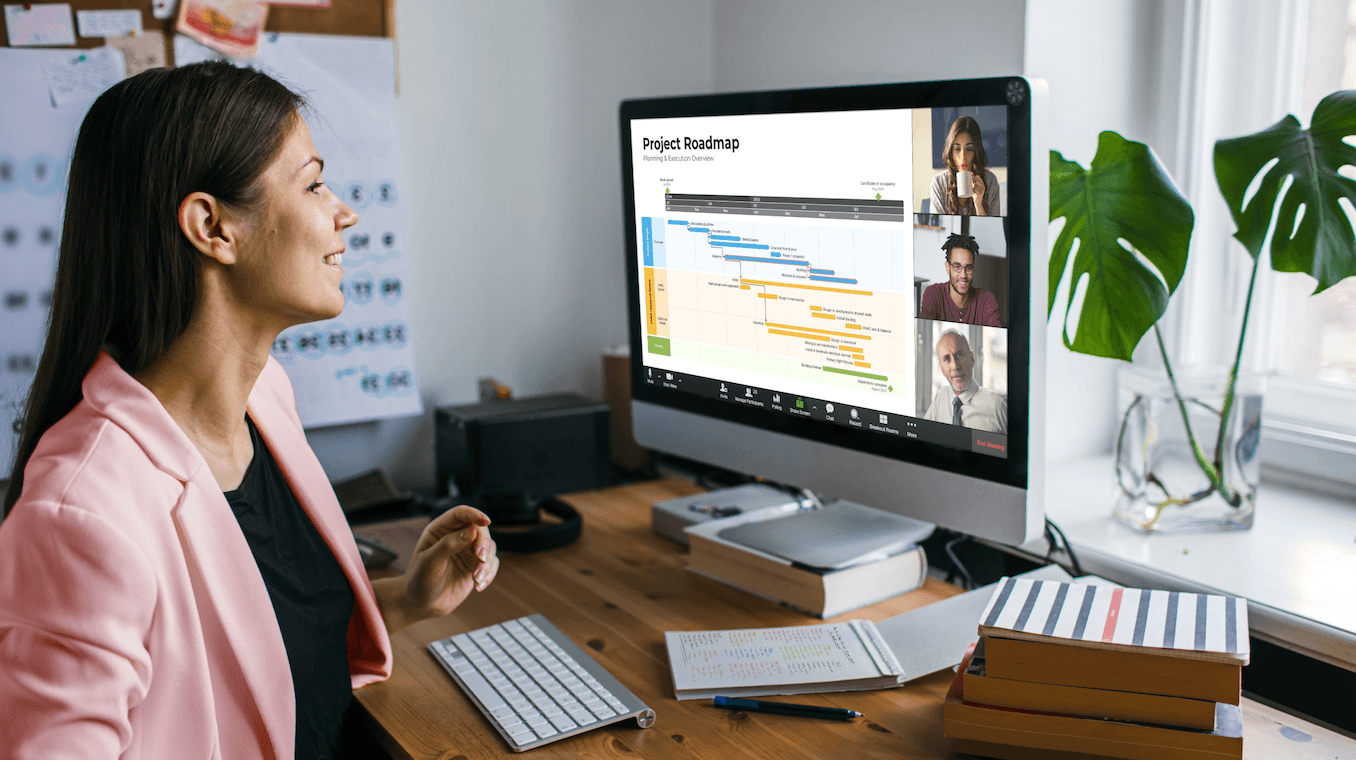
One manager runs scenario planning with a team of around thirty on a call, moving scenarios around on the screen, seeing the effect of each change straight away, and putting the resulting timeline into a governance deck for leaders. In her words, “the tool is a game changer for me pretty much every day.”
Another team exports from its planning system into Excel and refreshes its timeline in under five minutes, and because each function’s own data feeds the plan, any error traces back to a named source and functions treat the plan as theirs.
A clinical development plan that spans multiple projects, studies and therapeutic areas, including external collaborators whose data never enters the central planning system, stays current through a shared spreadsheet with color-coded ownership that is updated monthly and refreshed in a single click.
The Chemistry, Manufacturing and Controls group builds a summary plan for cross-functional governance and a detailed plan for its own function from a common template, so the two cannot quietly drift apart.
And in an annual strategy process where senior leaders review one therapeutic area after another over several days, a common plan format means leaders can read the content without first working out how the slide is laid out, which one leader described as removing cognitive load.
A partnership built together
Several pieces of functionality in Timeline were the result of direct feedback from the AstraZeneca team. Themes let timelines come out in AstraZeneca’s styling rather than ours. They are now preloaded and shareable, and can be set as the default so new timelines pick up AstraZeneca colors automatically. Plan versus actual shows baseline and reality on one bar, which is the question a steering committee asks. Custom timeband intervals let timescales match how teams report instead of how a calendar divides the year. The performance work in the version 15 releases came from the large, complex plans this kind of program produces, and it is part of more than 350 improvements between versions 13 and 15.
Asked why her team sends in ideas instead of working around problems, Hannah pointed to the relationship.
“The main difference that encouraged us to communicate was the fact that [Lucen] was listening… we feel like it’s a two way partnership to help solve them together.”
She describes a trusted partnership of about five years in which her team feels safe raising ideas and issues, and she encourages all of them to do it.
What happens next
A community of practice now runs inside AstraZeneca, with named representatives across functions and an internal community space where users help each other directly. The open question inside AstraZeneca is how consistently the tool can be run across the whole company.
More customer stories














Ready to write your own success story?
Plan, track, and visualize work in one connected, Microsoft-native clarity platform.