
Simple flowchart template
Five shapes and one decision branch: A start, two steps, a revision path, and an end. The fastest way to map a process you have not drawn before.



Four lanes — new hire, HR, IT, and manager — covering the offer, documents, provisioning, day-1 orientation, and the 30/60/90 review.
Powered by Lucen Flowchart
An employee onboarding flowchart is a swimlane diagram that shows every step between an accepted offer and a productive new hire, with each lane assigned to the team that owns it.

The offer is signed, and suddenly several teams have work to do at once. The flowchart puts that work in one frame — the new hire, HR, IT, and the hiring manager, each in their own lane — so nobody has to ask whose turn it is.

Individual tasks rarely fail. Handoffs do: the laptop is ordered before the background check clears, or payroll never hears that the start date moved. A swimlane makes those dependencies readable, so a stalled handoff is visible instead of assumed.

A diagram survives a review meeting in a way a spreadsheet does not. That is why HR and Ops teams keep the flowchart as the process of record rather than a slide decoration — and why it belongs in the deck, not in a tab.
Templates are grouped by the team that uses them. Open People & HR, pick the employee onboarding flowchart, and it opens on a PowerPoint slide as native, editable shapes.
Four horizontal lanes, the process shapes inside them, one decision node, and the connectors that join them — all native PowerPoint objects on a single 16:9 slide, built with Lucen Flowchart.
LANE 01
Completing the documents and providing corrections when anything comes back.
LANE 02
Offer accepted, sending the onboarding pack, and the documents-OK decision node.
LANE 03
Provisioning accounts, hardware, and role-based application access once documents clear.
LANE 04
Day-1 orientation and the 30/60/90 check-ins that close the loop, with the day 90 review as the terminal shape. Change the cadence, and Auto Layout reflows the rest of the lane with it.
Download the .pptx and drop it into your deck. Every shape is a native PowerPoint object, so you can edit it with PowerPoint's own tools — and with Lucen Flowchart installed, connectors reroute and the diagram reflows as you move things.

Click any step and type to replace the text. Font, fill, and size follow your deck theme.
Copy a shape into the flow, or delete one you don't need.
Insert another owner lane, or a new decision path, then let Auto layout redistribute the diagram evenly across the slide.

Change the deck theme and the flowchart follows. Override individual shape colors when a step or lane needs to stand out.
Teams use it as an SOP for People Ops, a stakeholder slide in a status or kickoff deck, a training reference for new managers, and a starting point for any multi-lane handoff process — procurement, client onboarding, or compliance review.
If your onboarding differs from the template, describe it instead of redrawing it. Lucen AI generates the diagram as native, editable shapes on the current slide, then keeps editing it in place rather than regenerating from scratch.
1. Open Lucen AI with Generate with AI — On the Lucen Flowchart tab, choose Generate with AI. The Lucen AI pane opens beside the slide — describe the change you need, or attach an image of a diagram you already have.
2. Answer the clarifying questions — If the prompt is broad, Lucen AI asks about the audience and depth before generating.
3. Refine it on the slide — Ask for a sub-swimlane or a new branch, or edit the shapes directly. The diagram stays the same object throughout.
If your onboarding process already exists as a screenshot or a photo of a whiteboard, give the image to Lucen AI instead of redrawing it. It reads the steps and lanes and rebuilds the same flowchart on your slide as native PowerPoint shapes, which you then edit like any other object — rename a step, add a lane, or ask for another branch.
An onboarding flowchart works best as a swimlane diagram, because onboarding is a series of handoffs between teams rather than a single sequence of tasks. We recommend following this process:
Each lane is one owner, in the order they get involved:
Add a lane for payroll, facilities, compliance, or training if your process needs it — Add layout inserts it, and the diagram reflows around it.
PowerPoint can do it with SmartArt and the Shapes gallery, but the work is manual: you draw the lane bands yourself, place each shape, and reattach connectors every time something moves. For a five-lane process, this becomes the reason onboarding diagrams stop getting updated.
A faster route is the Lucen Flowchart tab, which adds the lanes from Add layout, snaps connectors to shape anchors, and reflows the diagram with Auto layout when you add a step. Either way, the result stays a set of native PowerPoint objects on your slide.
Yes. If your process already exists as a screenshot or a photo of a whiteboard, give the image to Lucen AI rather than redrawing it. It reads the steps and lanes and rebuilds the same flowchart on your slide as native shapes.
From there, it behaves like any other PowerPoint diagram — rename a step, insert a lane, or ask for an extra branch, and keep editing the same object instead of regenerating it.
A checklist records what has to happen. A flowchart records who does it, in what order, and what is waiting on what. The difference matters in practice:
Most teams keep both: the flowchart as the process of record, the checklist as the per-hire tracker.
A 30/60/90 day plan sets what a new hire should have learned, contributed, and owned by each of those marks. Including it as the fifth lane keeps onboarding from appearing to end on day one:
If your cadence is different — 45/90, or a six-month ramp — rename the shapes and the lane reflows around them.
Onboarding fails at the seams between teams, so every step in the diagram should name a single owner. A common split:
If you already run a RACI for the process, the lanes in this template map directly onto the accountable party for each phase.
Preboarding work — offer, paperwork, provisioning, payroll — typically runs across the two to three weeks before the start date, and everything in the IT lane should be finished before day one. Onboarding itself is usually treated as complete at the day 90 review.
Putting relative timings on the shapes (day −14, day −5, day 1) rather than calendar dates keeps the diagram reusable for every hire, and makes it easy to present alongside a project planning timeline when onboarding is part of a wider ramp-up.
The download is a free .pptx made of native PowerPoint shapes, so anyone can open, read, and edit it, and you can share it as you would any deck — recipients need nothing installed.
The smart connectors, Auto Layout, and Lucen AI come from the Lucen Flowchart add-in, which adds a Lucen Flowchart tab to the ribbon and runs on Windows with PowerPoint 2016 or later and with PowerPoint for Microsoft 365. PowerPoint for web, Mac, and mobile are not supported. Setup and troubleshooting steps are in Lucen Support.
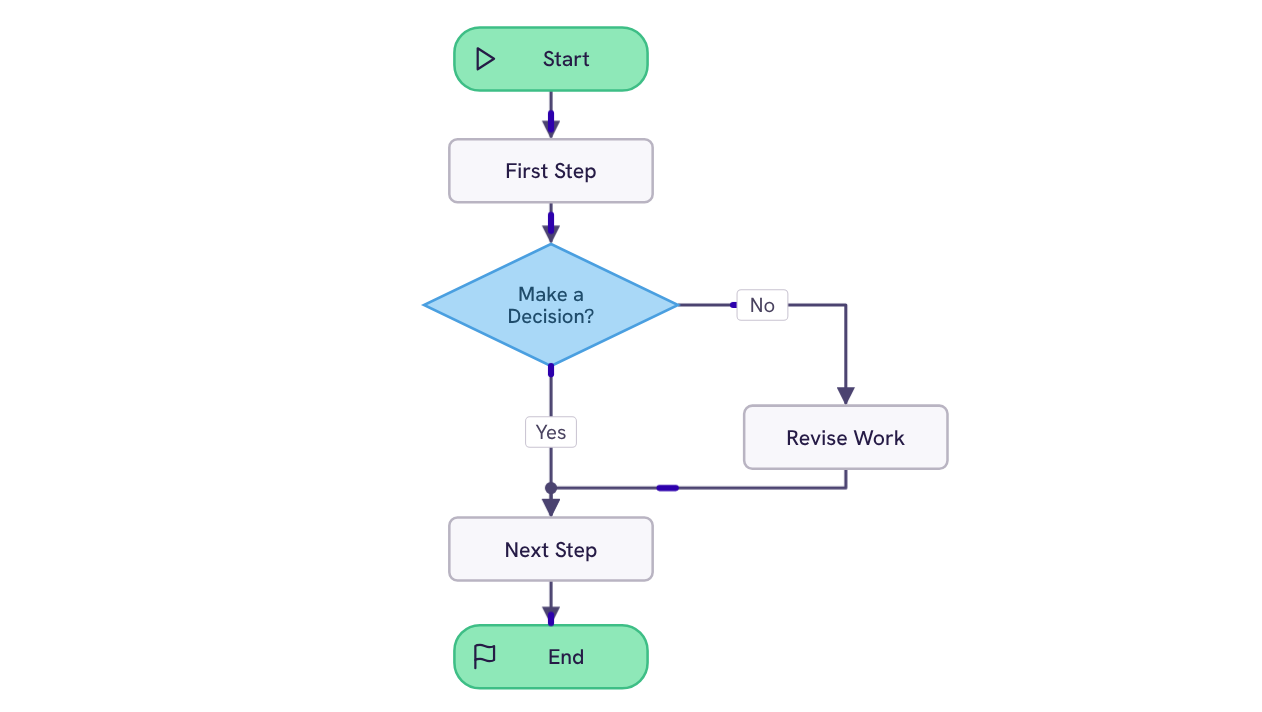
Five shapes and one decision branch: A start, two steps, a revision path, and an end. The fastest way to map a process you have not drawn before.
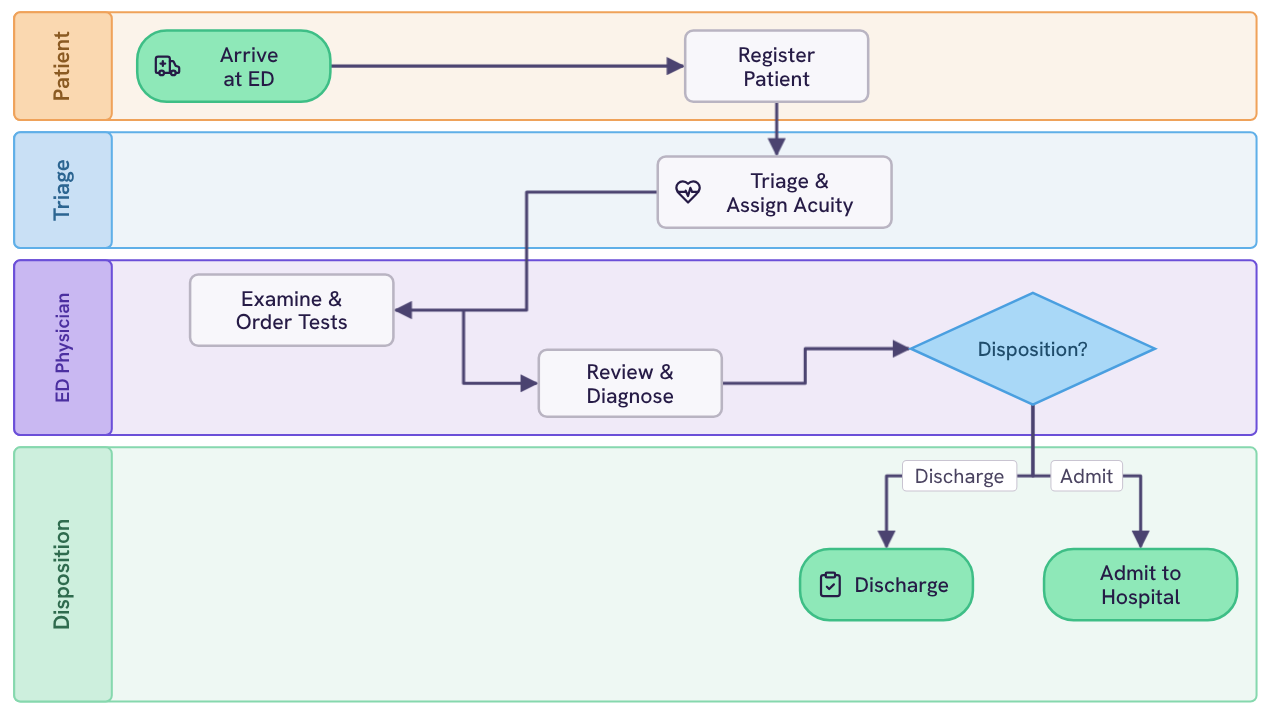
Four lanes: patient, triage, ED physician, and disposition. Routing a visit from arrival through acuity assessment and examination to admission or discharge.
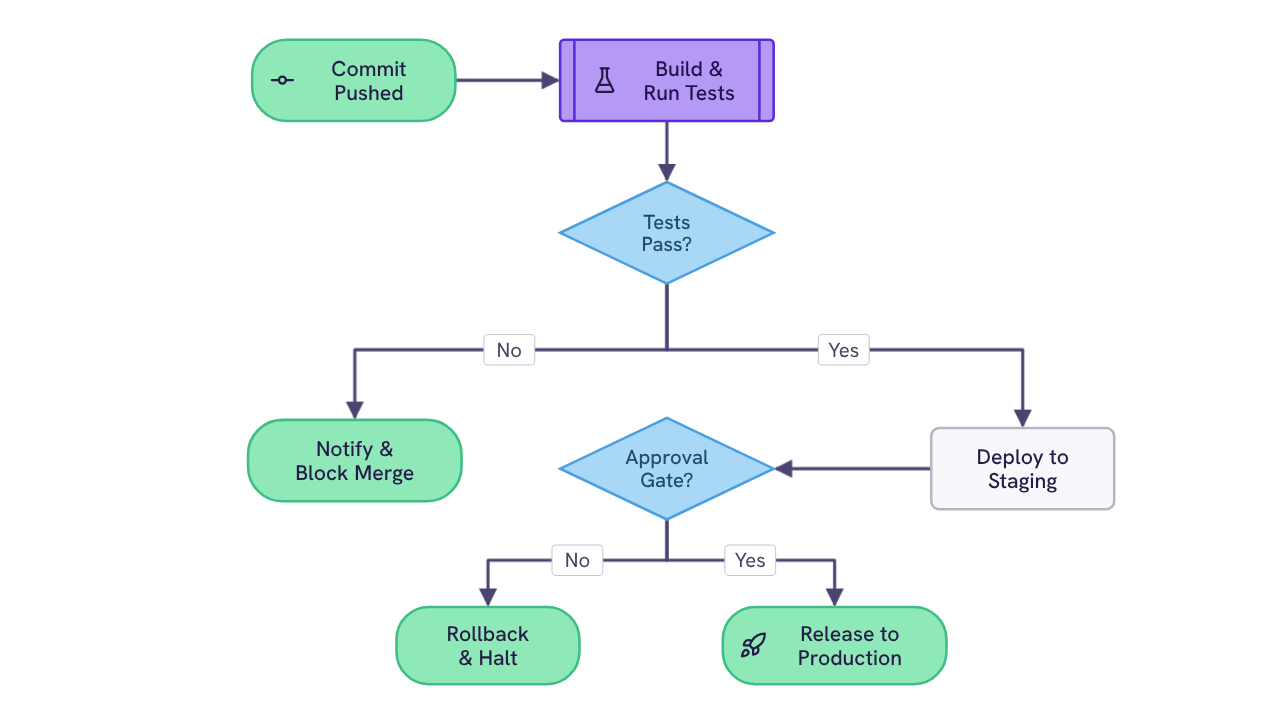
Two gates: automated tests and a human approval. Routing every commit to production, a blocked merge, or a rollback.
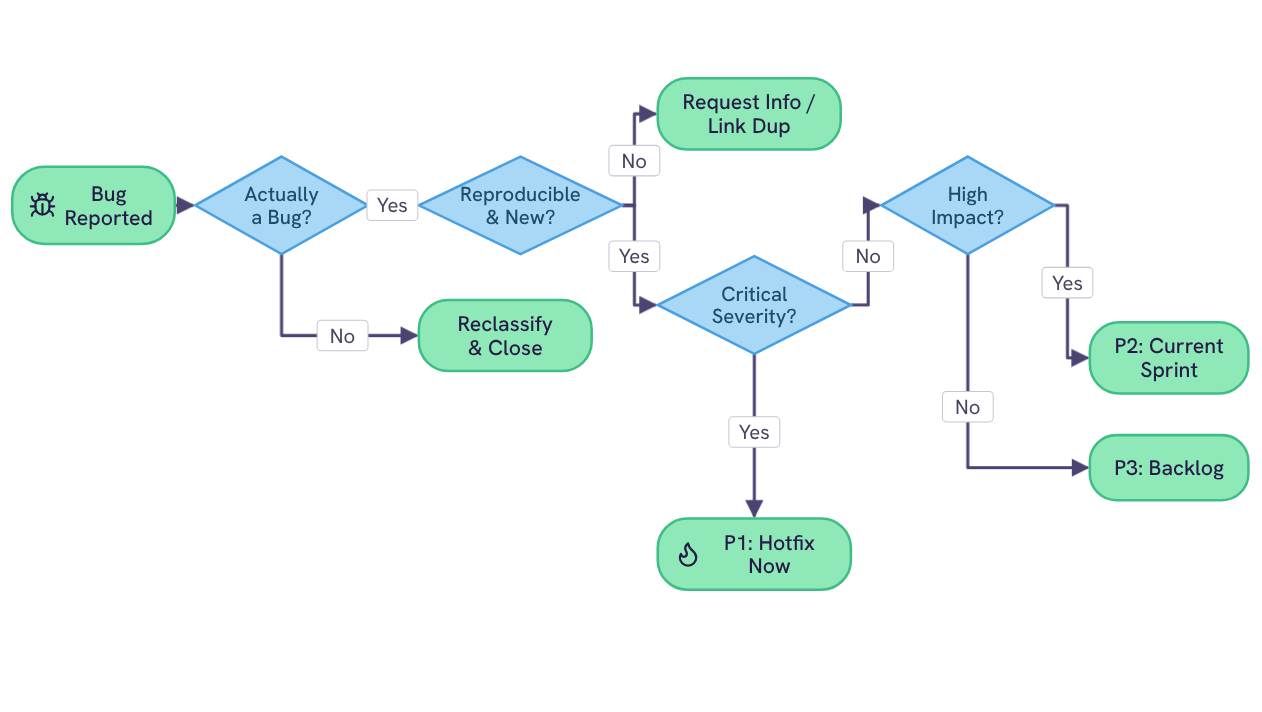
Four decision points: validity, reproducibility, severity, and impact. Routing every reported bug to one of five outcomes, from hotfix now to backlog.
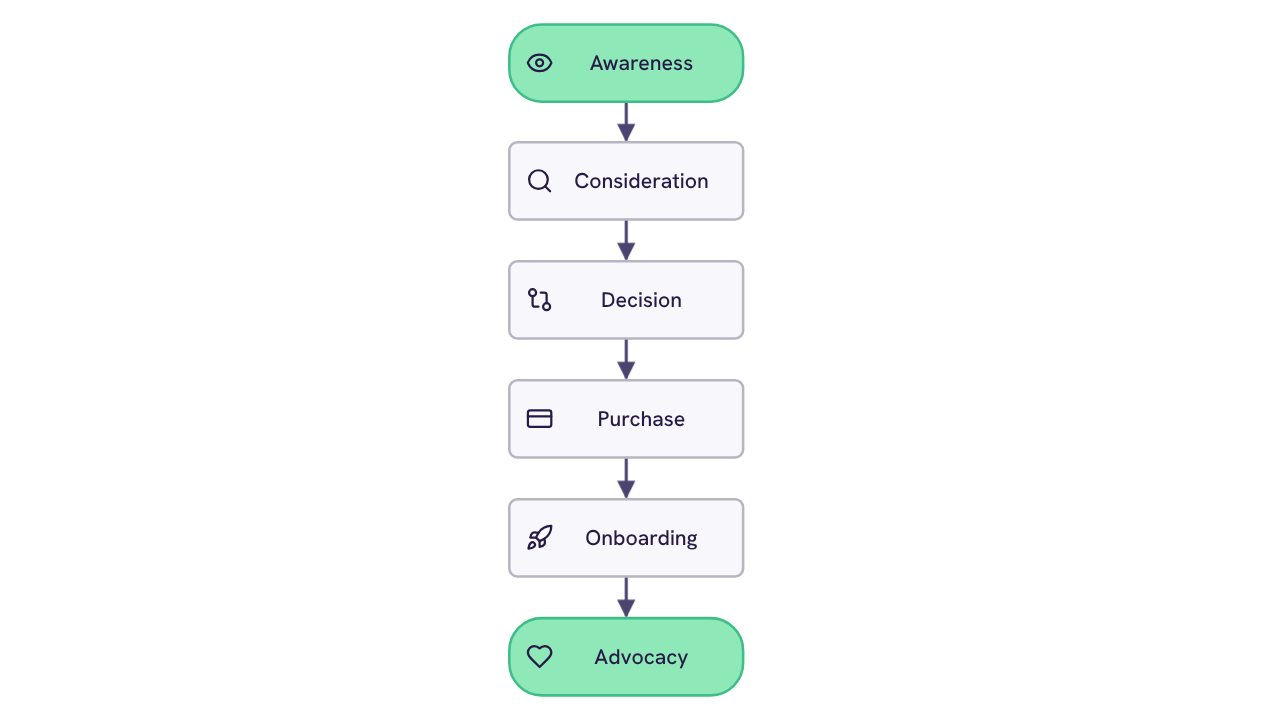
Six stages: awareness, consideration, decision, purchase, onboarding, and advocacy. Laid out as a linear lifecycle with a milestone icon at every step.
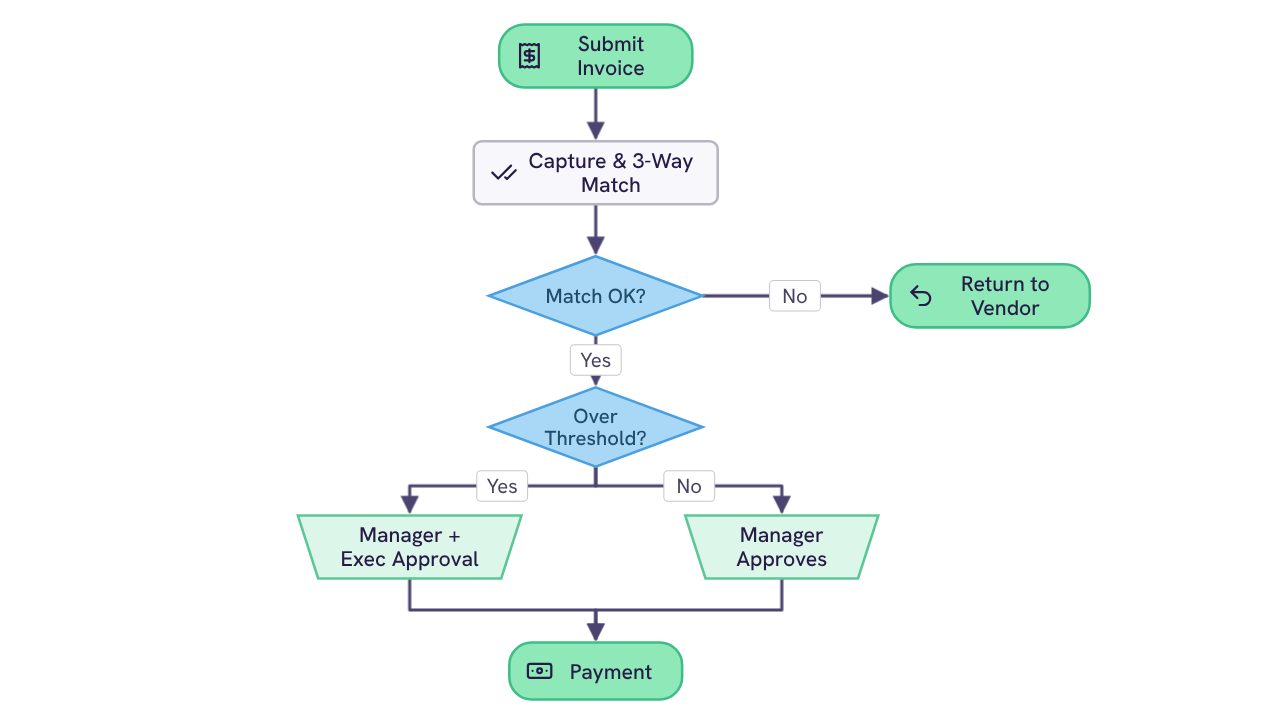
Two decision points: the three-way match and the value threshold. Routing an invoice from submission through the right level of approval to payment, or back to the vendor.
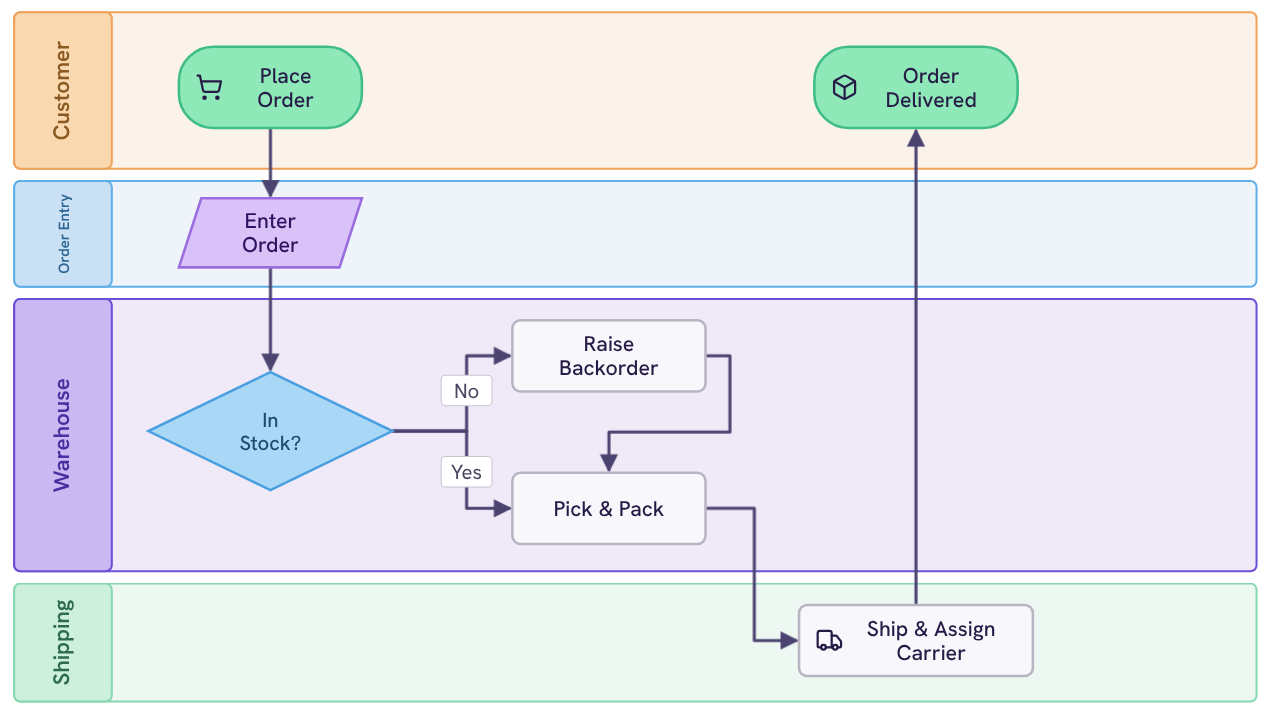
Four lanes: customer, order entry, warehouse, and shipping. Routing an order from placement through a stock check and picking to dispatch and confirmed delivery.
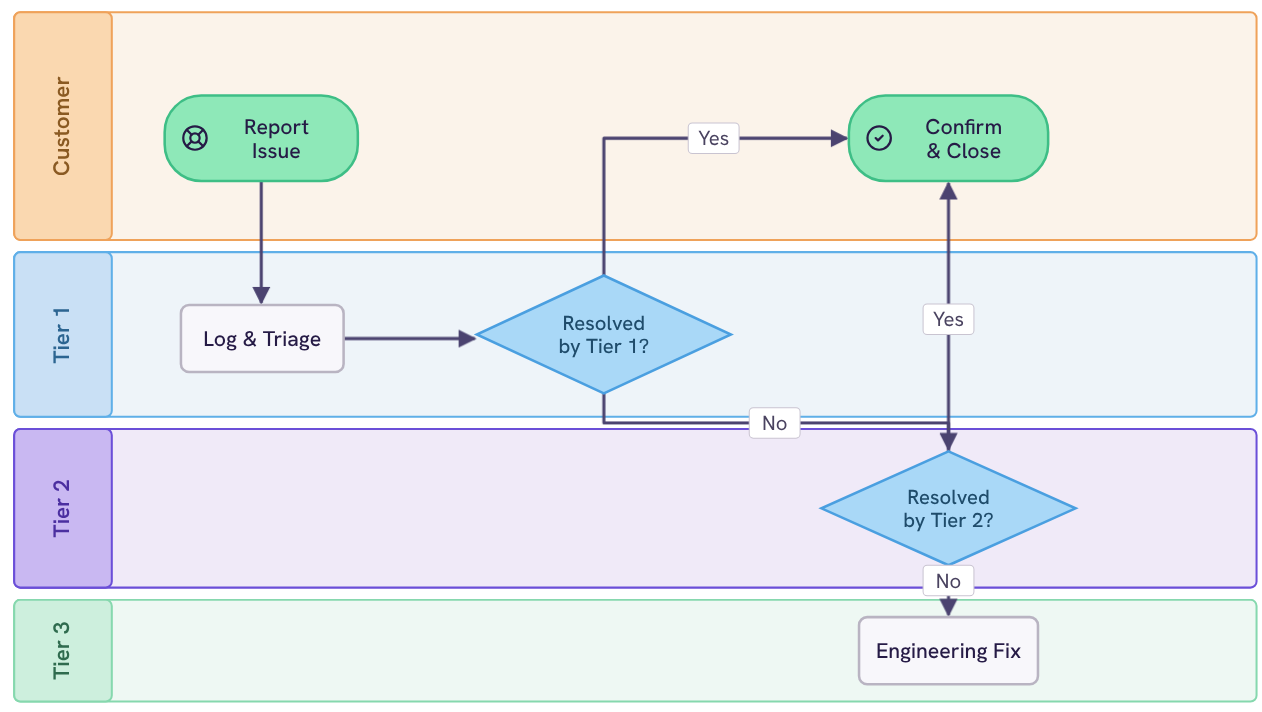
Four lanes: customer, Tier 1, Tier 2, and Tier 3. Routing an issue from first report through two resolution gates to engineering or a confirmed close.
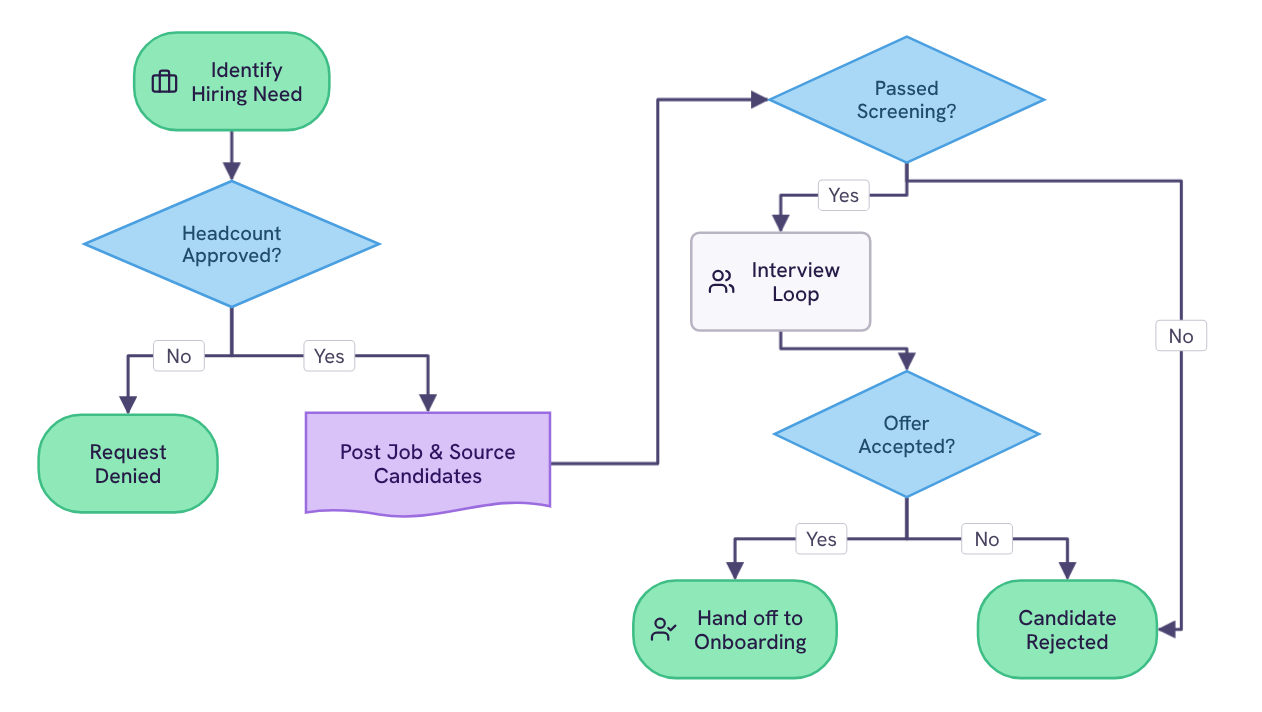
Three decision points: headcount approval, screening, and the offer. Routing a role from an identified need through sourcing and interviews to the onboarding handoff.
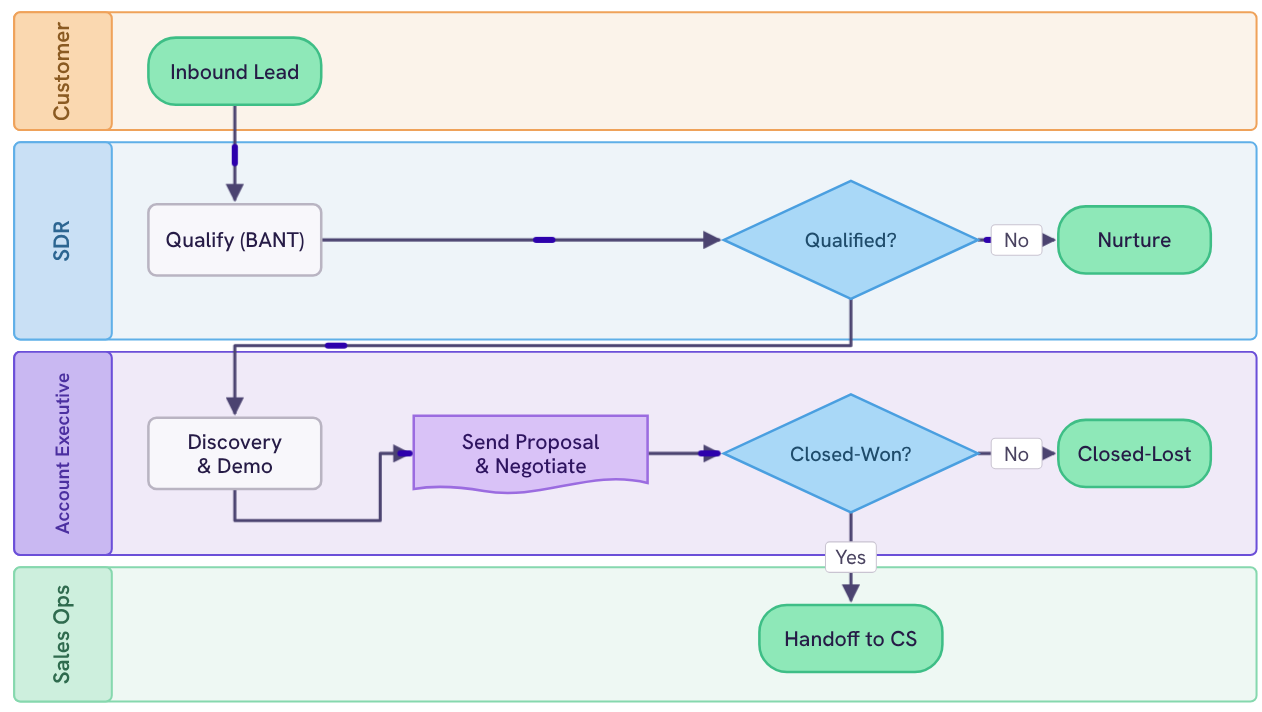
Four lanes: customer, SDR, account executive, and sales ops. Covering the inbound lead, BANT qualification, discovery, proposal, and the handoff to customer success.
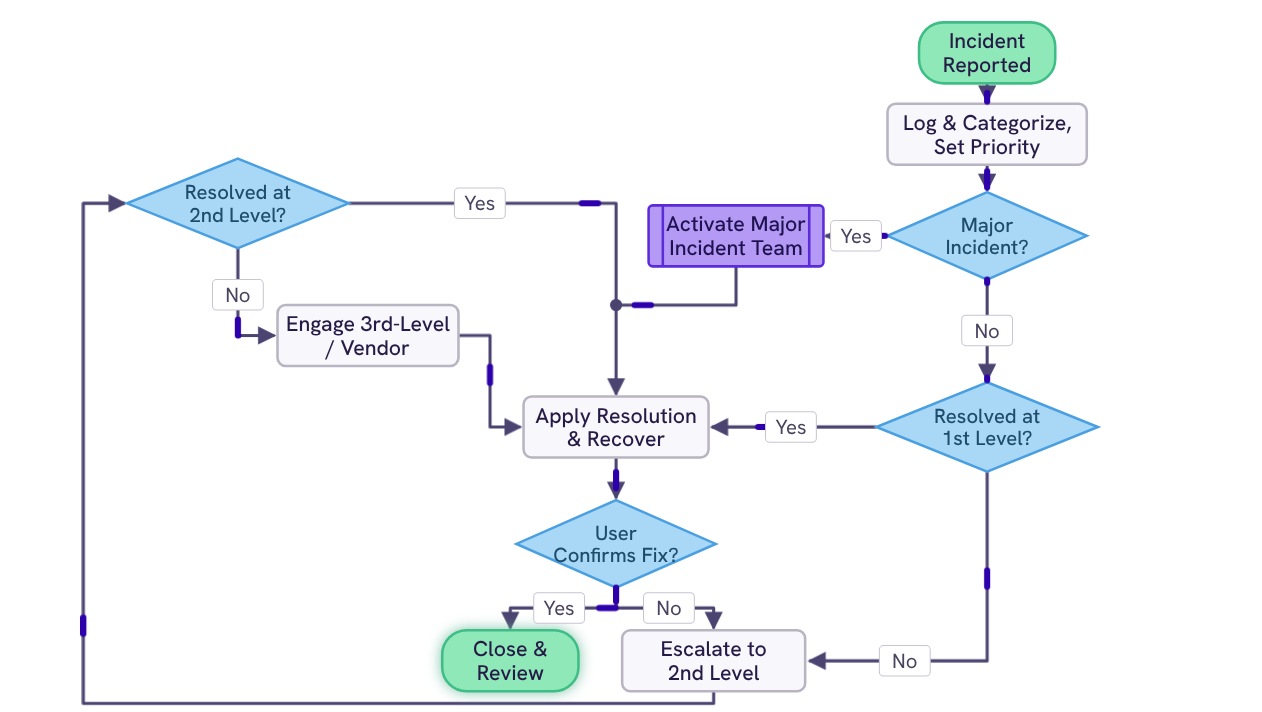
Four decision points: major incident, first level, second level, and user confirmation, routing an incident from first report through tiered escalation to close and review.

Free .pptx, editable in PowerPoint, no diagramming tool required.

Your download should start now. If it doesn’t start click here and check your inbox for tips to get started.